

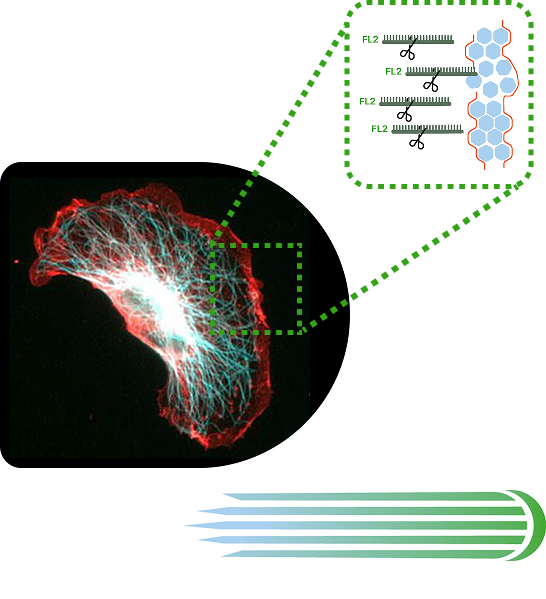

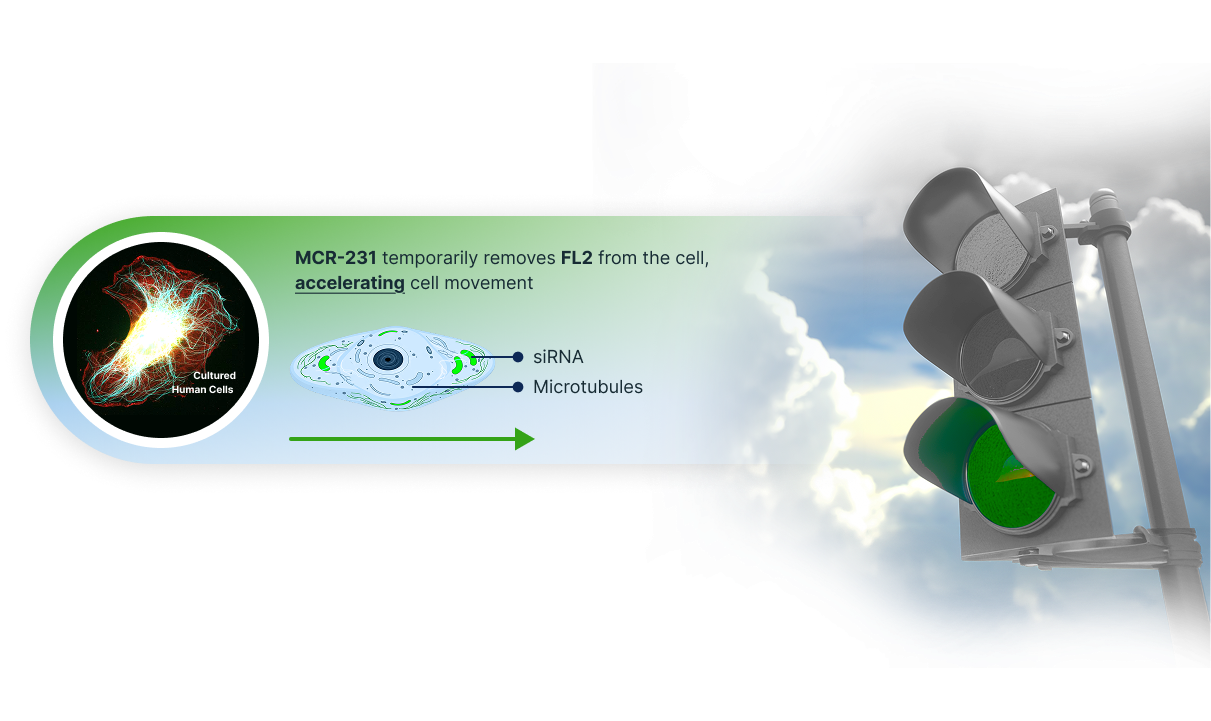
MicroCures uses precisely engineered siRNA to temporarily silence FL2 — an intracellular enzyme that restricts cell movement after injury. By removing this biological brake, our technology enables coordinated tissue repair across epithelial, neuronal, and stromal cells.
We’re redefining regenerative medicine by unlocking what biology already knows how to do.
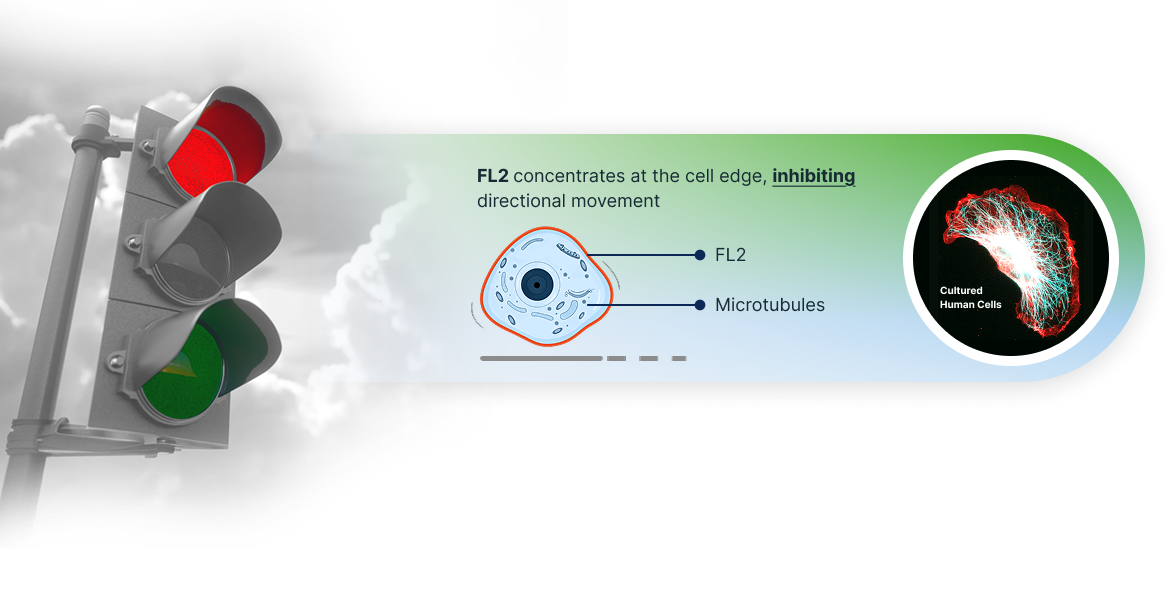
Key players in cell movement1,2:
Under normal conditions, this system maintains healthy, balanced tissue behavior. But during injury, FL2 becomes overexpressed, excessively restricting the movement of the very cells needed for repair.
As a result:
Microtubules are the roads cells use to move, and FL2 is the traffic light that controls the flow. During injury, FL2 becomes overactive and turns too many lights red — preventing cells and nerves from reaching the wound.
References:
1. Smart K. & Sharp D.J., Cytoskeleton (2024): FL2 regulates microtubule severing and cell motility.
2. Baker K. et al., JCI Insight (2021): FL2 knockdown enhances axonal growth and tissue repair.

A proprietary lipid nanoparticle (LNP) formulation transports siRNA directly into corneal and epithelial cells after topical application.

Inside the cell, the siRNA engages the RNA interference pathway, temporarily reducing FL2 expression and allowing microtubules to stabilize and extend.

With FL2 lowered, cells regain motility—closing epithelial defects, supporting nerve regeneration, and helping restore normal tissue architecture.
How Our siRNA Approach Compares
Unlike growth-factor therapies that work at the cell surface, our siRNA acts inside the cell to remove the barrier to repair—enabling broader, more coordinated healing.

Extracellular signaling only

May create prolonged or variable signaling

Single-pathway focused

Requires refrigeration/frozen storage

Frequent or multiple daily dosing



References:
1. Smart K. & Sharp D.J., Cytoskeleton (2024): FL2 regulates microtubule severing and cell motility.
2. Baker K. et al., JCI Insight (2021): FL2 knockdown enhances axonal growth and tissue repair.
3. Wang, J., Dey, A., Kramer, A. H., Miao, Y., Liu, J., Baker, L., et al. (2021). A Novel Therapeutic Approach to Corneal Alkaline Burn Model by Targeting Fidgetin-Like 2, a Microtubule Regulator. Translational Vision Science & Technology, 10(1), 17-17.