Expanding the Reach of Pro-Regenerative Healing

While neurotrophic keratitis remains our primary focus, early research shows the potential for our intracellular siRNA platform to extend into nerve repair, wound healing, and other areas where natural regeneration is limited.

A Single Mechanism with
Broad Therapeutic Opportunity

Microtubules and FL2 plays a critical role in regulating cell motility across multiple tissue types. By temporarily silencing FL2, our platform restores the natural ability of cells to migrate, rebuild structure, and regenerate nerves. This gives our siRNA technology broad relevance across ocular, neural, and dermal therapeutic landscapes.


Future ApplicationS

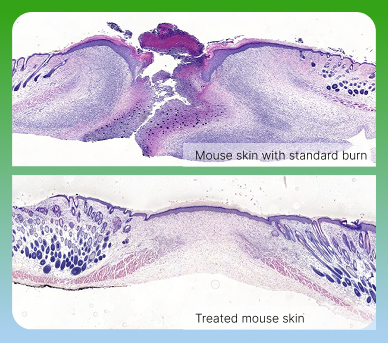
Excisional Wound & Dermal Burn Repair

Restoring coordinated tissue regeneration in full-thickness wounds  and dermal burns through localized FL2 inhibition.

Cavernous Nerve Regeneration

Enhancing peripheral nerve repair and functional recovery through localized FL2 inhibition.

Spinal Cord Regeneration

Enhancing peripheral nerve repair and functional recovery through localized FL2 inhibition.

Cardiac Tissue Repair

Supporting revascularization and functional recovery following myocardial injury.
Why the Platform Scales

A Regenerative Strategy Rooted in Cellular Biology

Our technology scales because it is built on a fundamental biological process: the ability of cells to move and repair. By modulating FL2—an enzyme broadly involved in injury response and cytoskeletal regulation—we aim to apply one validated mechanism to multiple therapeutic areas with high unmet need.
This strategy allows us to:

Explore Opportunities to Collaborate

We partner with researchers, clinicians, and organizations committed to advancing pro-regenerative therapies across ophthalmology, nerve repair, and wound healing.